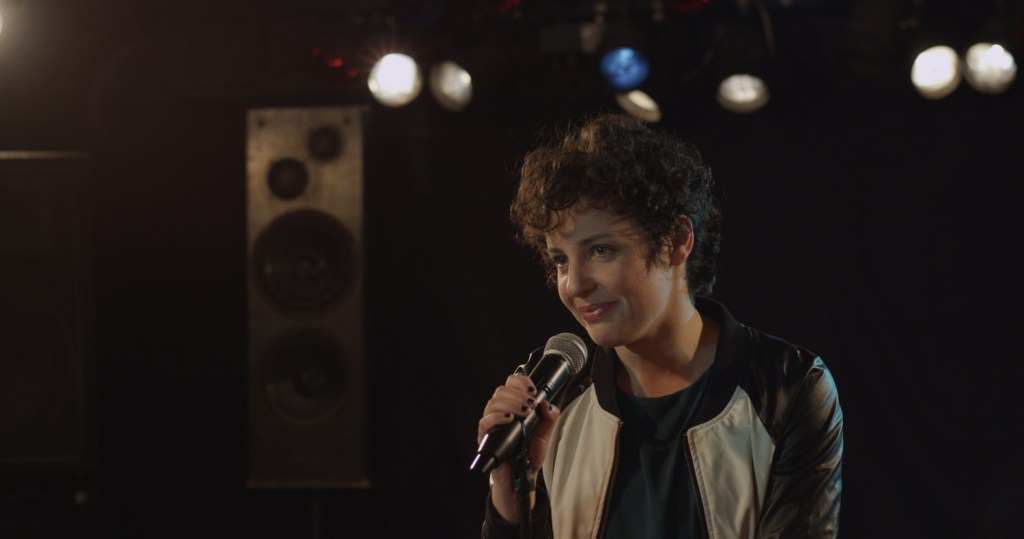
The Russian-Jewish community in Boston gets the spotlight in the indie film “Pinsky,” created by Rebecca Karpovsky and Amanda Lundquist.
The movie, which was filmed in Brookline and Newton, was shown last month by the Boston Jewish Film Festival, at the Somerville Theater.
Karpovsky and Lundquist, who met as students at Newton South High School, explore the themes of family, identity, coming of age, and inter-generational relationships, within the lens of Russian-Jewish culture.
Sophia Pinsky (played by Karpovsky) is a woman in her mid-twenties, trying to figure out what to do with her life. After her grandfather dies and her girlfriend breaks up with her on the same day, Sophia is convinced by her grandmother to move back home.
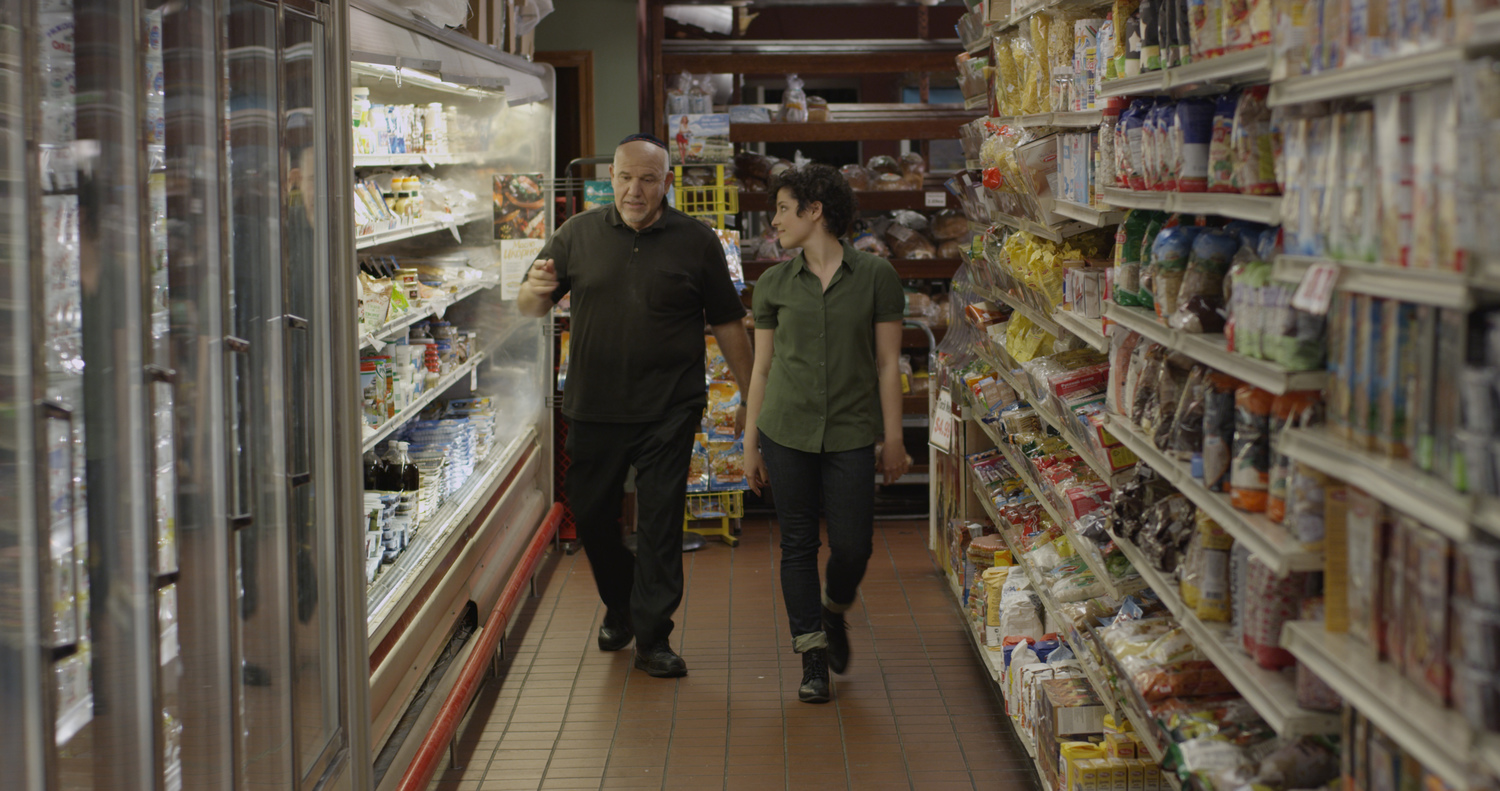
Sophia’s grandmother Marina (played by Boston-based Larisa Popova), who did not speak to her for three years while she was in a relationship with another woman, is now trying to set her up with a nice Jewish boy, the son of her friend.
Marina’s attempt to exert control does not stop with Sophia – she is also meddling in the lives of her son (Eduard Snitkovskiy, also from Boston) and grandson (Ara Woland).
The story of creating “Pinsky” began seven years ago, when Karpovsky had the idea of writing a script about her difficult grandmother. She enlisted the help of her high school friend, Lundquist, and together they enrolled in a screenwriting class. After the script was finished, they decided to go further and try actually creating the film.
“Pinsky” was made with the support of COJECO (Council of Jewish Émigré Community Organizations – the coordinating body of the Russian-speaking Jewish community of New York) Blueprint Fellowship.
“There is that inter-generation story that I’ve lived in my own family, when you don’t understand the other generation sometimes and there is a constant ripple effect,” Karpovsky said in the Q&A session after the screening. “A lot of people in the Russian-Jewish community have asked me, ‘How is everyone else going to understand the grandmother, because that’s our grandmother?’ And I have people coming to me from all over, saying it is a universal story.”
Snitkovskiy, who is a member of Arlekin Players Theater, said he decided to get involved in “Pinsky” because he liked the role of the father, even though it was a small part. “The dad is weak-willed, but I liked him as a person,” he said in a phone interview. “I felt sorry for him. He was caught in the middle between his daughter and his mother.”
Being caught in the middle is another theme of the movie. “The film is about being in between,” said “Pinsky” writer and director Amanda Lundquist. “You are not fully American and you’re not fully Russian.”
Snitkovskiy said that after watching the film with his friends, they talked about the identity of young Russian-speaking Americans who were either born in the U.S. or came here at a young age. He said that some of his friends felt that Sophia Pinsky’s character “wasn’t typical of our community.” In their experience, young Russian-Americans, unlike Sophia, respect their parents and grandparents, show an interest in Russian culture and make an effort to speak Russian.
“The film may not be about a typical family,” Snitkovskiy continued, “but this is their story. It makes you think about relationships with young people. The important thing is, these issues in relationships between generations do exist.”
In the Q&A, Karpovsky also talked about whether or not “Pinsky” is representative of the Russian-speaking Jewish community. “We didn’t want to push anything on the film, because that’s not who we are,” she said. “It’s just her life, and these are the people around her. She’s queer and her grandmother wants her to be with this lovely Russian Jewish boy. Cliché or not cliché, that’s the reality. We just wrote from what we know.”
This article appeared in the Russian Boston Gazette.
 Alexandra (Sasha) Schwank